Service · Plant-wide wireless

Plant-wide indoor & outdoor wireless.

An industrial site survey is not a commercial one. Without the right technology and certifications, a wireless survey becomes an executive and corporate liability. Completely Managed is Ekahau-certified and trusted by the largest vendors to run their industrial surveys — across plants, yards, ports, mines, and substations.

3
Survey methods
passive · active · predictive
ECSE
Ekahau certified
survey engineers
In/Out
Indoor & outdoor
industrial coverage
RF
Coverage maps
+ AP placement
01Why industrial is different

A plant survey isn't a coffee-shop survey with more bandwidth.

The environment fights you. Steel, fluid, machinery, safety policy, and industrial protocols all push back against the typical RF playbook — and the most common failure mode is over-deployment, which makes coverage worse, not better.

The environment

What works in a hotel ballroom does not work in a plant. Surveys have to be designed for what's actually around the antennas:

  • Tenuous surroundings — steel racking, fluid lines, dense machinery
  • Industrial safety requirements — PPE, lockout / tagout, escorted areas
  • Unique site nuances — overhead cranes, SGVs, robotic arms, AGVs
  • Industrial equipment interference (SCADA / CIP traffic, VFD harmonics)
  • Complex access-point placement geometry across multi-storey production
  • Co-channel interference from over-deployment — the common mistake
Industrial plant — typical wireless environment
Outdoor yard / heavy equipment coverage
02Survey methods

Three methods. One source of truth.

Each method answers a different question. Most engagements use two of the three to triangulate findings against the real environment.

→ Method 01
Passive survey

Walk the site listening — measure what's already in the air without touching any production AP or association state. Reveals the actual RF environment as your devices experience it.

  • Signal strength by zone
  • Existing AP & SSID inventory
  • Channel utilisation
  • Source of interference
  • Noise floor
→ Method 02
Active survey

Walk the site associated to test SSIDs — measure end-to-end throughput, retransmit rate, roaming behaviour, and per-AP QoS in the conditions production devices will actually face.

  • Throughput / iperf per zone
  • Retry / loss / latency
  • Roaming hop quality
  • Voice / video QoS
  • Data-rate floors
→ Method 03
Predictive design

Model the building — walls, materials, racking, equipment — in Ekahau before APs go in. Output: an AP layout with placement rationale, predicted coverage, and cabling impact.

  • 3D floor model
  • Predicted heat maps
  • AP count / placement / channel plan
  • Cable-pull bill of materials
  • Co-channel resolution
03What you get

Discovery & documentation engineering and management can both read.

Every CM wireless engagement produces a single source of truth — readable by an executive on page one and by an RF engineer on page twelve. No separate "marketing deck" vs. "engineering deck."

01
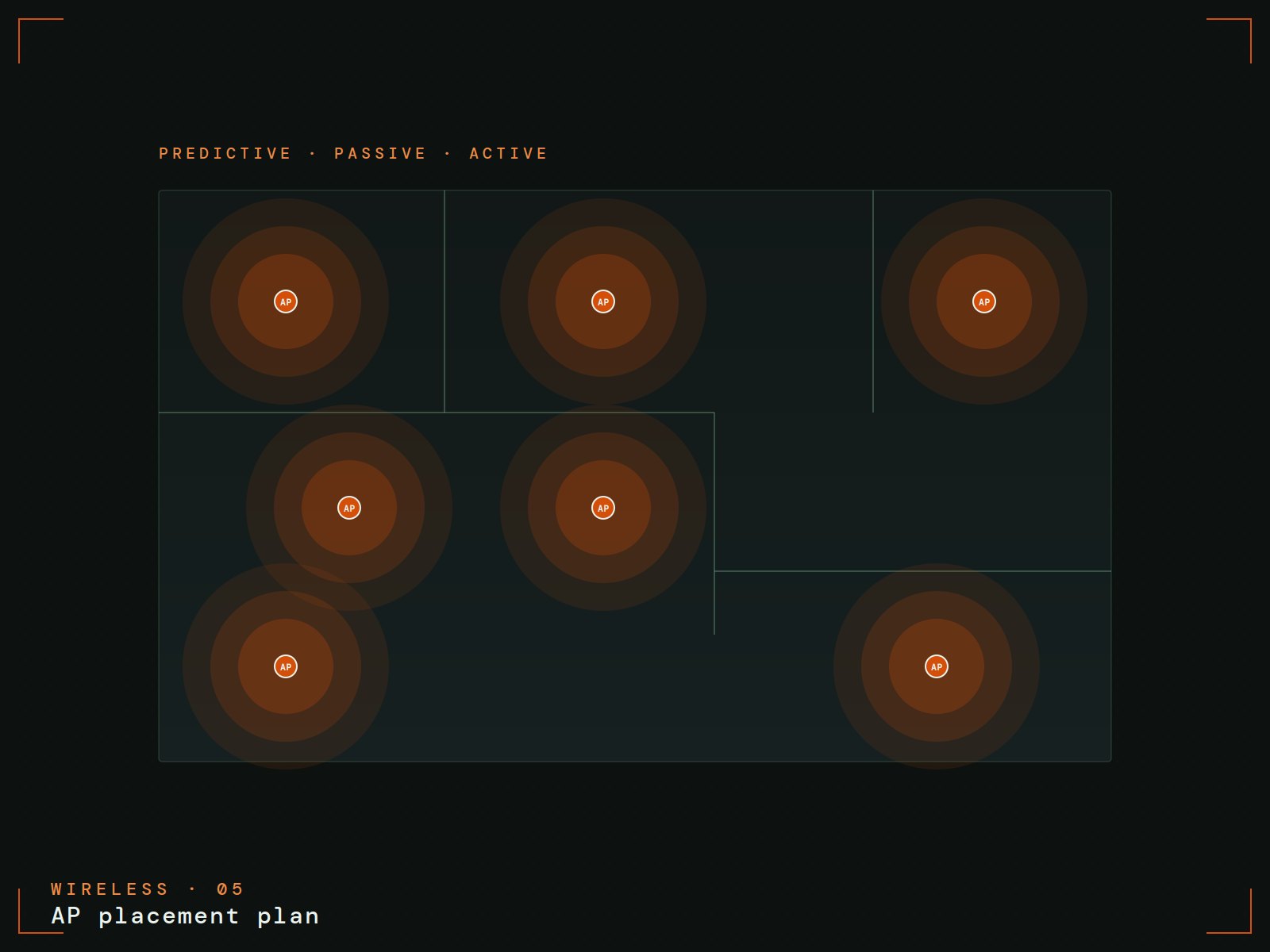
Suggested AP locations + rationale
Each proposed AP comes with a placement justification tied to coverage, capacity, roaming, and structural geometry. No "we put one in every other column."
02
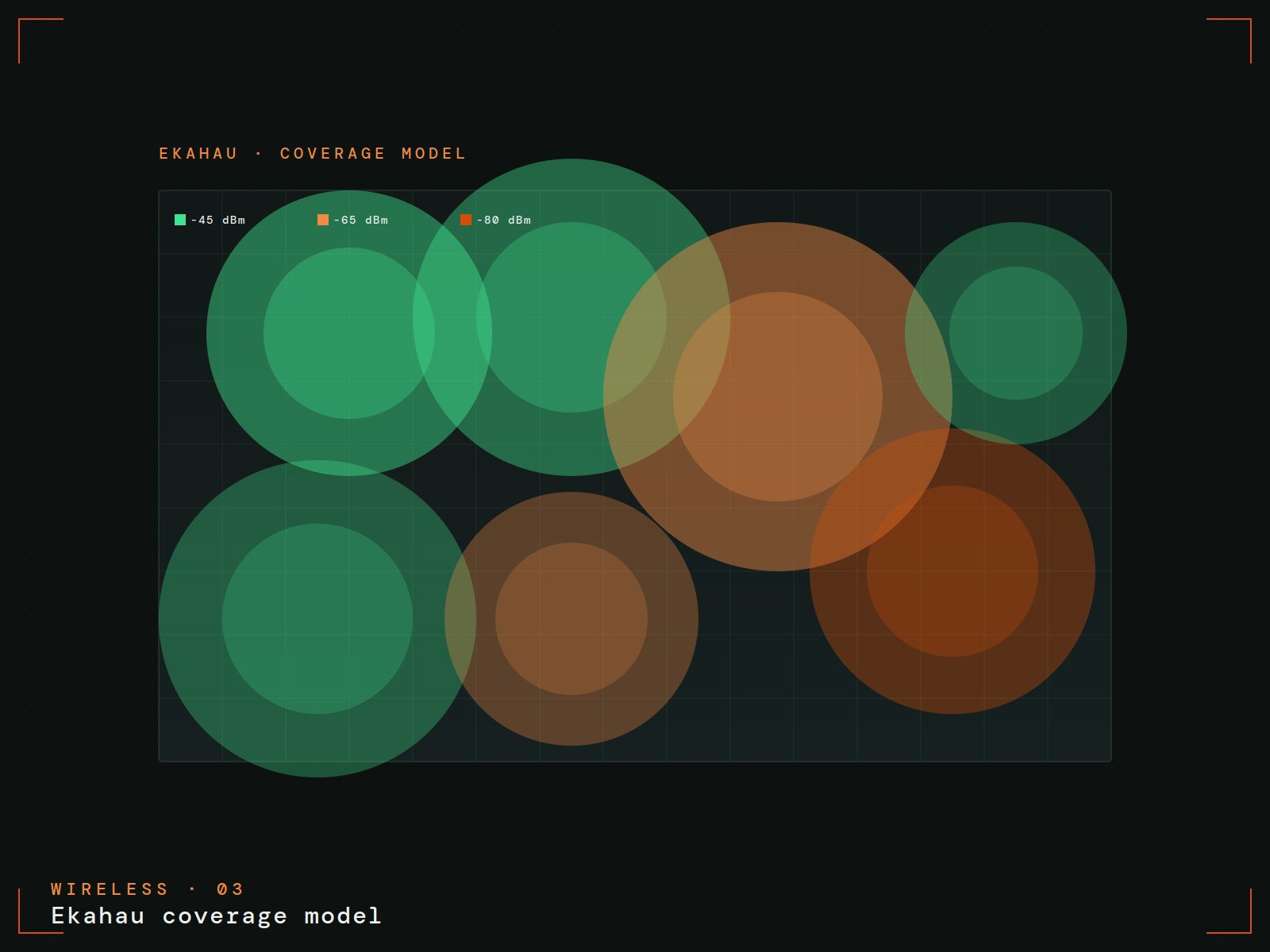
Wireless coverage maps
Heat maps for signal strength, SNR, retry rate, and data-rate floor — overlaid on real floor plans, not generic shapes.
03
Currently-deployed device inventory
What's actually on the wireless today: APs, BSSIDs, channels, transmit power, vendor, capable rates. Often the first time anyone has seen the real list.
04
Signal, gain, interference, emitted signals
Per-zone measurements — signal strength, antenna gain effects, interference sources, and emitted-signal compliance against site policy.
05
Roaming capability + QoS
Real measurements of roaming hop time, association loss, and end-to-end QoS for the workloads that matter — handheld scanners, AGV / SGV controllers, voice, video.
06
Co-channel & over-deployment audit
The most common cause of "bad wireless" in plants is too many APs at too much power. We name what to turn down, what to move, and what to remove.
Sample Ekahau coverage map
Survey engineer on plant floor
AP placement diagram
04Where we deploy

Indoor. Outdoor. Anywhere production happens.

Indoor surveys for manufacturing, packaging, warehousing, and substation control rooms. Outdoor surveys for yards, ports, mines, rail, and long-range recreational coverage. Same engineering, different antennas.

→ Environment 01
Manufacturing floor

High-density machinery, steel racking, overhead utilities, conveyor systems. Most common engagement type.

→ Environment 02
Warehouse & distribution

Tall racking, RF reflection corridors, scanner-heavy traffic, AGV / SGV roaming requirements.

→ Environment 03
Outdoor yard & port

Container yards, log yards, intermodal ports. Directional antennas, sector planning, weather considerations.

→ Environment 04
Mining & resources

Open-pit and underground RF planning. Vehicle-to-vehicle, vehicle-to-base, ruggedised AP enclosures.

→ Environment 05
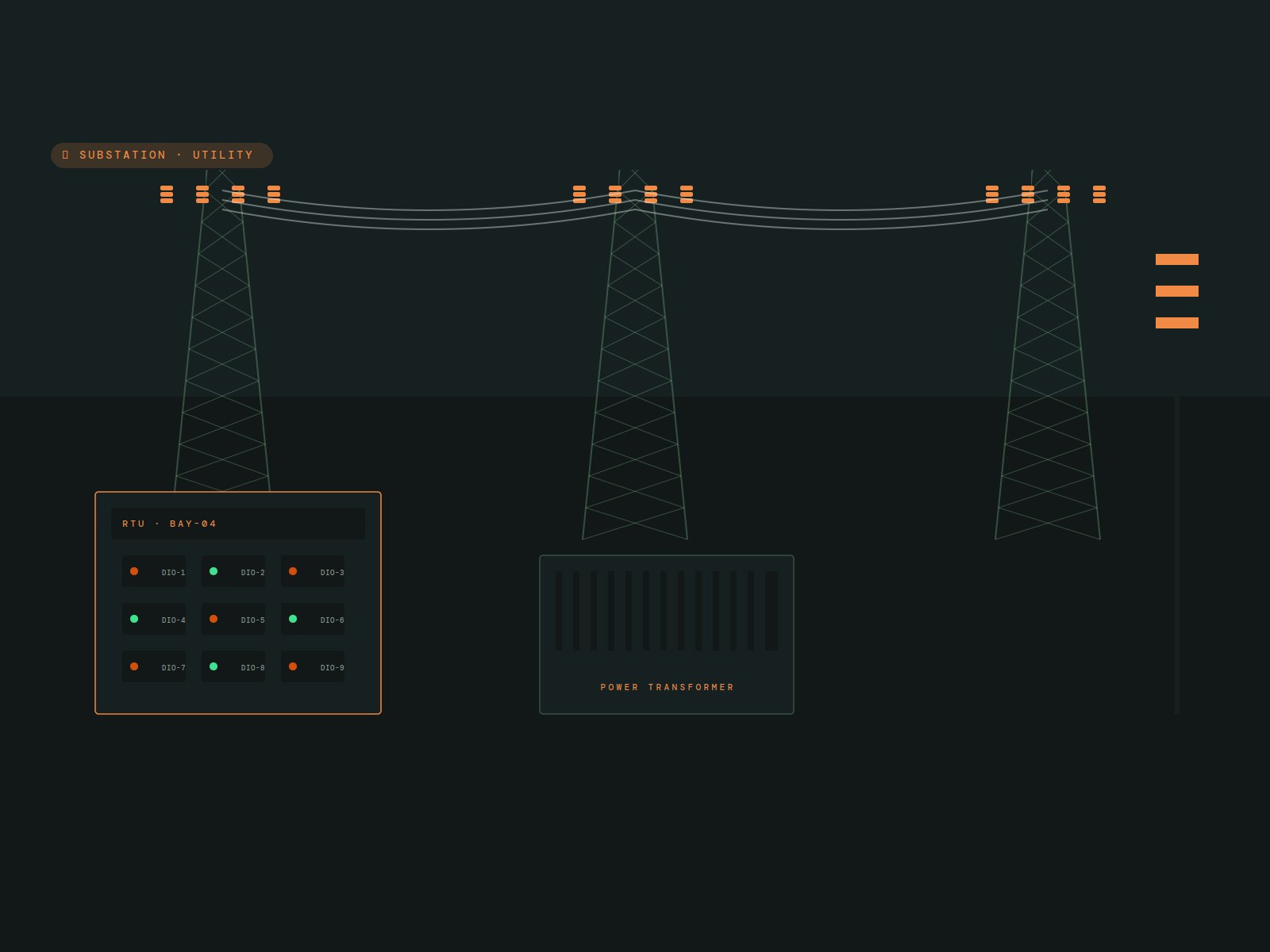
Substation & utility

IEC 61850 process bus, time-sensitive networking awareness, EMI hardening.

→ Environment 06
Long-range / recreational

Resort properties, parks, agricultural fields. Point-to-point and point-to-multipoint bridge design.
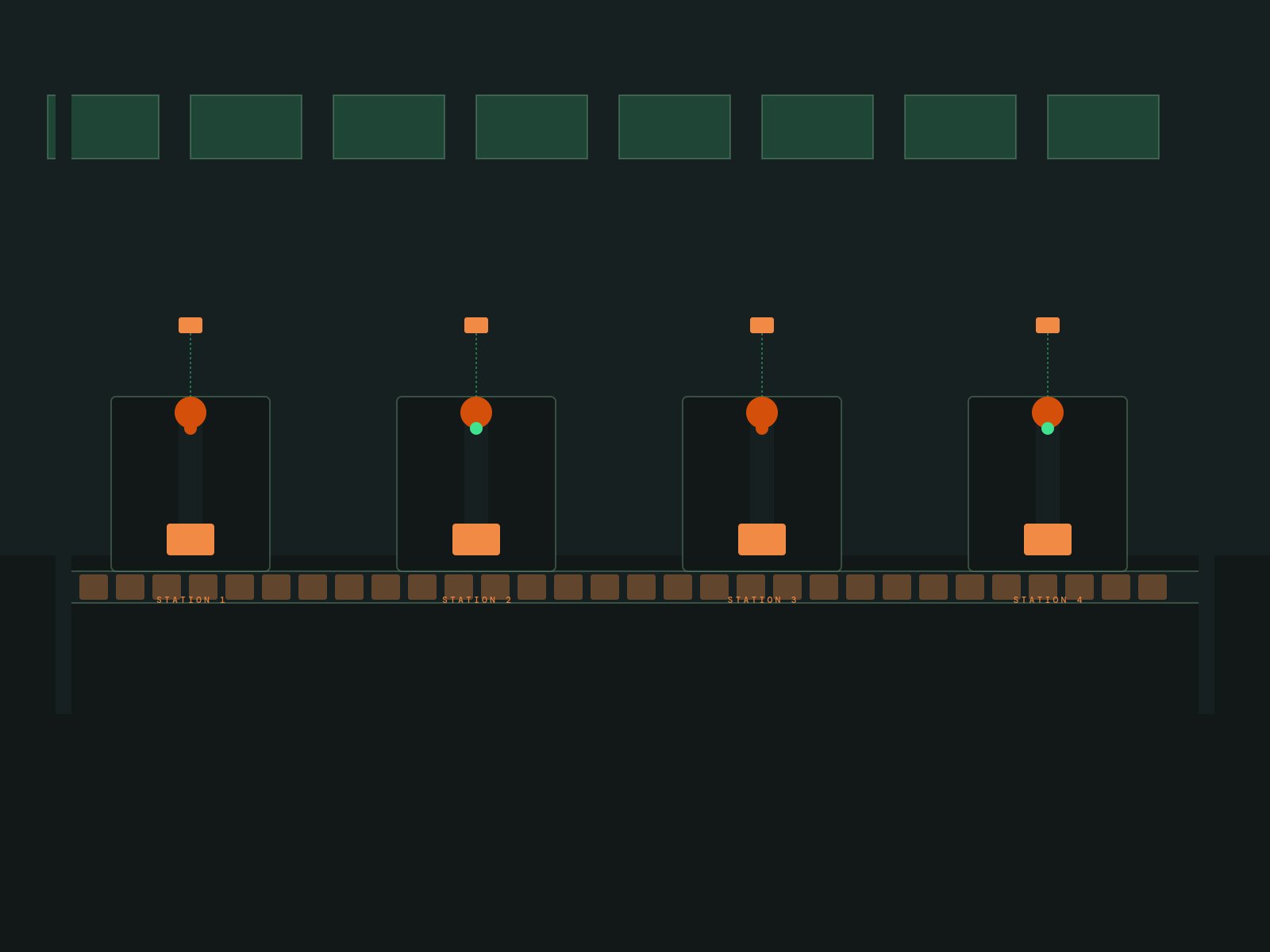
Manufacturing-floor deployment
Outdoor yard / port deployment
Substation / utility cabinet
05Vendors & certifications

Certified where it counts.

Ekahau ECSE survey engineers. Cisco Premier Industrial Partner with CCIE / CCNP-certified network engineers. Vendor-aware on the major indoor and outdoor radio platforms.

ToolEkahau Pro ToolEkahau Sidekick CertECSE — Survey CertECSE — Design CertCCIE × 2 CertCCNP × 2 VendorCisco Catalyst 9100 VendorCisco Meraki MR VendorCisco IW (Industrial Wireless) VendorAruba Instant On / CX VendorFortinet FortiAP
06How we engage

Three ways to start.

MODE / 01 Site survey only +

Survey + report engagement — no implementation tied to it.

  • Passive + active walk-through of the agreed scope
  • Coverage maps, AP inventory, interference sources, recommendations
  • Executive summary (page 1) and full technical appendix
  • Typical turnaround: 2–4 weeks depending on site size
  • You keep all raw data and Ekahau project files
MODE / 02 Predictive design + install +

End-to-end greenfield or refresh — survey informs design informs install.

  • Predictive 3D model in Ekahau before any AP is purchased
  • AP placement BoM with cable-pull schedule
  • CM Field Services for cable, mount, terminate, configure
  • Post-install validation survey to prove the predicted result
  • Hand-off package: as-built diagrams, configs, validation report
MODE / 03 Engineer for a Day +

Day-rate engagement of a CM wireless engineer — fastest path to targeted help when the issue is bounded.

  • Spot-check a problem zone with the Ekahau Sidekick
  • Tune channel / power on existing APs
  • Validate a previous installer's deployment
  • Knowledge-transfer day with your network team

Tell us what needs to cover.

Send a floor plan or describe the site. We'll come back with the right method, the right team, and a real estimate — not a brochure.